
Trademark Opposition
Get your Trademark Opposition starts @ ₹8,499 Only!
- Lowest Price Guarantee
- Quick and Hassle-Free Process
- Incorporation Certificate in 7 Days
- Expert Assistance Without the Hassle
Get Expert Consultation
Trademark Opposition – Process, Documents Required, and Fees
Trademark Opposition (or “Trademark Opposed”) occurs when a third party raises an objection against a trademark application within four months from the date it is published in the Trademark Journal.
A trademark opposition may be filed for several reasons, such as questioning the ownership of the mark, highlighting its similarity with an existing trademark, claiming that it is descriptive, or citing any other grounds under the Trade Marks Act, 1999.
Benefits of Trademark Opposition
Many businesses wonder why trademark opposition is important or how it benefits them. Here’s why the process is valuable:
- Increases Brand Awareness – Publication in the Trademark Journal acts as an advertisement, enhancing visibility of the mark among consumers and competitors.
- Protects Existing Brands – Registered trademark owners get the opportunity to oppose similar or identical trademarks that may create confusion in the future.
- Ensures Public Clarity – Prevents duplication and reduces confusion among the public by differentiating similar-looking trademarks.
Trademark Opposition Notice [Sample]
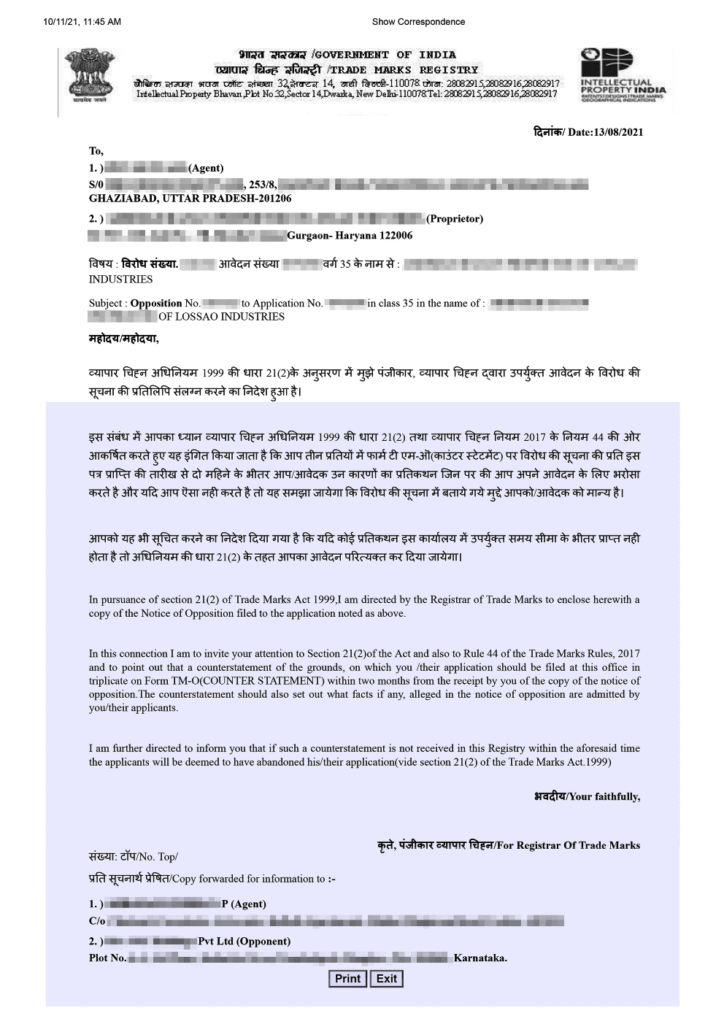
Who Can File a Trademark Opposition?
According to Section 21 of the Trade Marks Act, 1999, “Any person may, within four months from the date of advertisement or re-advertisement of an application for registration, give notice in writing to the Registrar of opposition to the registration.”
In simple terms:
- Anyone can oppose a trademark if they believe it is similar to their existing mark or if it violates legal grounds for registration.
- Multiple individuals or organizations can file a collective opposition.
Example: If someone tries to trademark the word “DELHI”, various businesses, groups, or individuals can jointly raise opposition.
Grounds for Trademark Opposition
A trademark opposition can be filed on several grounds, including:
- The mark is identical or confusingly similar to an existing trademark.
- The mark lacks distinctiveness.
- The mark is descriptive in nature.
- The application was filed in bad faith.
- The mark is customary in common language or trade practices.
- The mark is likely to deceive consumers or cause confusion.
- The mark violates existing laws.
- The trademark is restricted under the Emblems and Names Act, 1950.
- The mark may hurt the religious sentiments of any community or group.
Trademark Opposition vs Counter-Statement
Many people confuse raising a trademark opposition with filing a counter-statement. These are two separate processes:
- Trademark Opposition → When you file an objection against a trademark published in the Journal.
- Counter-Statement → When someone has opposed your trademark application, and you must reply to the Registrar defending its validity.
Both processes require strong documentation and legal expertise.
Documents Required for Trademark Opposition
| Fee Type | Individual / MSME / Startup | Company / Large Enterprise |
|---|---|---|
| Government Fee | ₹4,500 per class | ₹9,000 per class |
| Clarvex Professional Fee | ₹1,499 | ₹1,499 |
| Total Cost | ₹5,999 | ₹10,499 |
How to File a Trademark Opposition?
To file a trademark opposition, an individual or business must submit a Notice of Opposition within four months of the advertisement or re-advertisement of the mark in the Trademark Journal.
- File Form TM-O in the prescribed format.
- Pay the official fee of ₹2,700/-.
- Include:
- Grounds for opposition.
- Details of the opposed trademark (application number, class of goods/services, applicant name).
- Details of the opposing party (individual/company).
- Grounds for opposition.
Documents Issued After Filing Trademark Application
Once your application is filed, you will receive:
- Payment Challan (Government receipt).
- Form TM-A Receipt.
- Application Number screenshot for tracking.
Process of Replying to a Trademark Opposition
If your trademark has been opposed, you must respond with a counter-statement.
1. Evidence Stage
- File a counter-statement within 60 days from the date of receiving the opposition notice.
- If you fail to respond, the trademark application may be rejected.
- The counter-statement is reviewed by the Registrar and then forwarded to the opposing party.
- The opponent has 2 months to file supporting evidence through an affidavit.
- The applicant can also submit evidence in defense or waive this right.
- The opponent may file additional evidence within 1 month after receiving the applicant’s reply.
2. Hearing Stage
- Once the evidence stage concludes, the Registrar schedules a hearing and informs both parties at least one month in advance.
- After the hearing, the Registrar decides whether the trademark should be registered or rejected.
Note: This decision only concerns registration. To prevent the applicant from using the trademark, a separate infringement case must be filed in court.
Why Choose Clarvex?
At Clarvex, we help businesses handle trademark opposition and counter-statements with expert legal support. Our team ensures smooth navigation through regulatory complexities, safeguarding your brand identity and minimizing risks.
What You Get with Clarvex:
- One-Stop Corporate Solutions
- PAN India Services
- Free Expert Guidance
- Google-Verified Business
- Dedicated Support Team
- Money-Back Guarantee
FAQs on Trademark Opposition
Q1. How do you fight a trademark opposition?
You can defend your application by filing a point-wise counter-statement, submitting supporting evidence, and presenting your case during the hearing.
Q2. When can you file a trademark opposition?
Within 4 months from the date of publication of the trademark in the Trademark Journal.
Q3. How do I file a notice of trademark opposition?
By submitting an affidavit with personal or company details and filing Form TM-O with the prescribed fee.
Q4. What is the opposition period for a trademark?
The opposition period lasts for 4 months from the date of advertisement in the Trademark Journal.